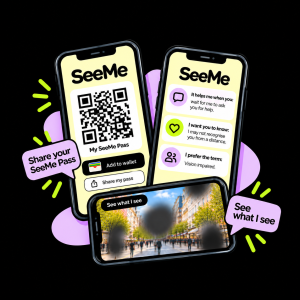
SeeMe is a digital sight loss passport designed to make it easier for people with sight loss to share what matters to them — what they need, what helps, what they prefer and, uniquely, how they see the world. Every SeeMe Pass can be personalised by its user and shared with family, friends, teachers, healthcare professionals, support workers, colleagues or anyone else they choose. It can also be saved to a digital wallet, meaning that when those conversations matter, the information is ready to share quickly and easily. Instead of having to repeatedly explain your sight loss from the beginning, SeeMe gives you a simple way to start the conversation on your terms.
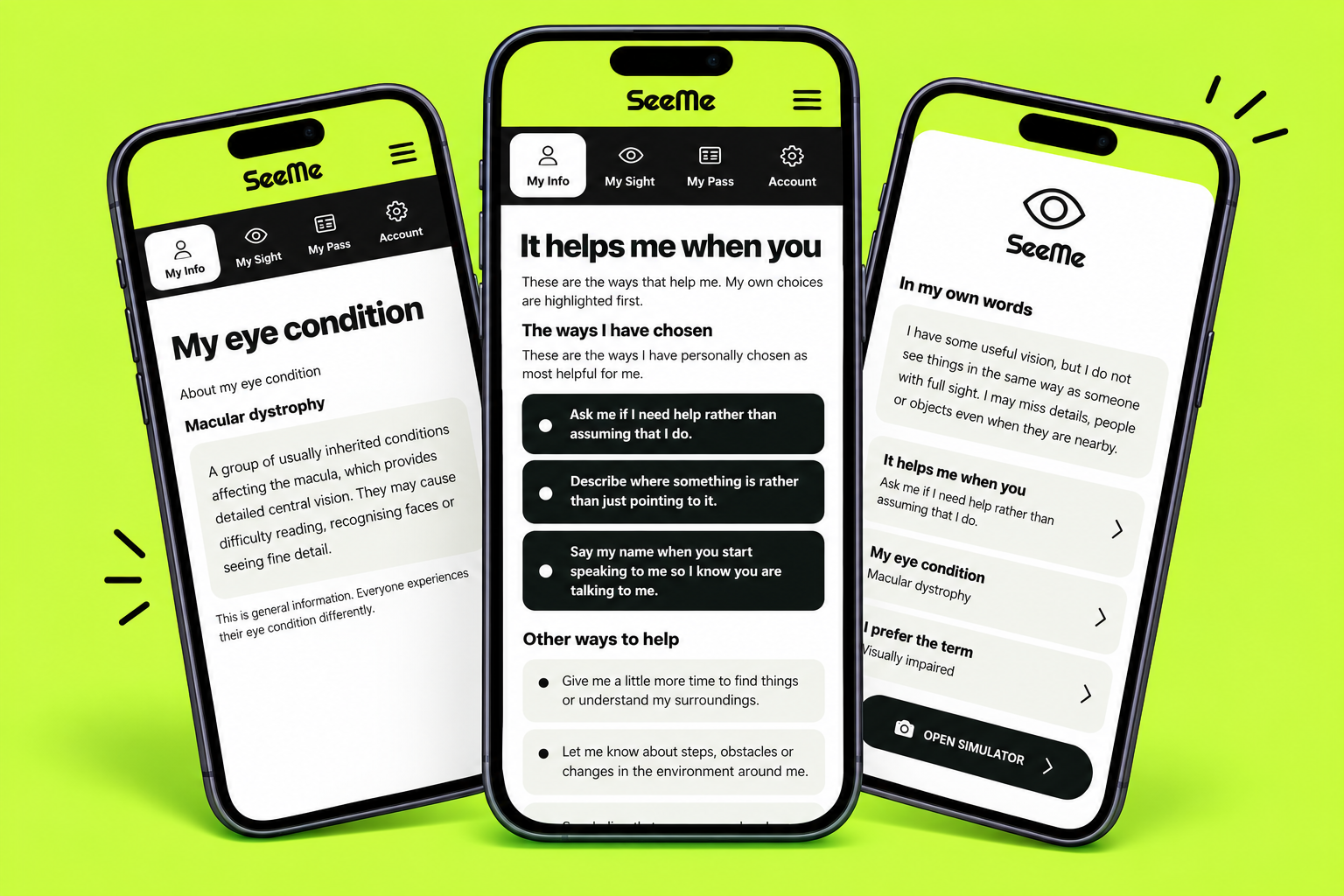
But SeeMe is about more than communicating support needs. One of its most powerful features is the sight simulator built into every pass. Using the camera on a smartphone, another person can look at the world around them through a simulation created from the SeeMe user’s own settings. Describing sight loss can be incredibly difficult, particularly to someone who has always been fully sighted. Saying “I have very little peripheral vision” or “I can’t clearly see what’s directly in front of me” communicates the facts, but it can still be difficult for another person to understand what that actually means. SeeMe helps turn an explanation into an experience. It doesn’t suggest that a simulation can recreate the reality of living with sight loss, but it can offer something incredibly valuable: a different perspective and a starting point for deeper understanding.
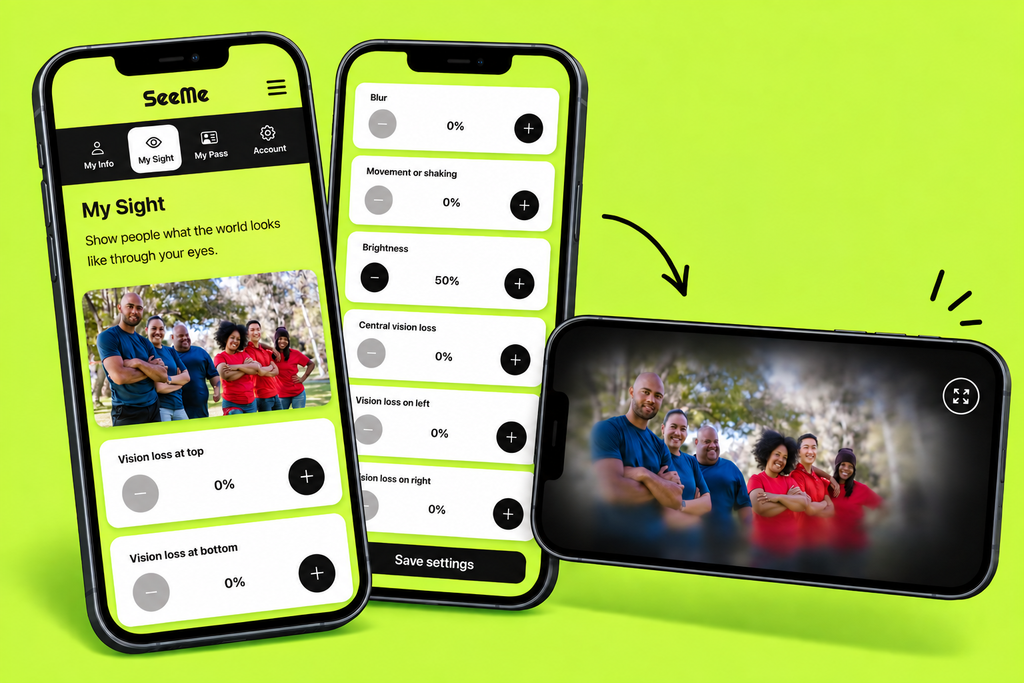
That understanding can make a real difference in everyday situations. Imagine being in hospital, surrounded by unfamiliar people and having to explain your sight and support needs to different members of staff while you’re already dealing with everything else happening around you. A SeeMe Pass can quickly communicate the things you’ve chosen as important — how you’d like someone to approach you, what practical support helps and how your sight affects the way you interact with your surroundings. It isn’t there to speak for someone or replace a conversation. It’s there to make that conversation easier to begin, reduce assumptions and give someone another tool to advocate for themselves.
For children and young people, that can be especially important. A student may know that they cannot see something a teacher is showing them but struggle to explain exactly why. A teacher might genuinely want to make their classroom accessible but find it difficult to understand what that particular student experiences. SeeMe can help bridge that gap. The student’s pass can communicate the adjustments and approaches that work for them, while the simulator can help a teacher, teaching assistant, friend or family member gain a better understanding of the barriers they encounter. That understanding can lead to better conversations, more appropriate support and, importantly, greater independence for the young person rather than other people simply deciding what they need.
And the impact of SeeMe isn’t limited to the person with sight loss. It can be just as powerful for the people around them. Someone might have known a friend, partner or family member with sight loss for years and still find it difficult to truly picture what that person can and cannot see. That’s not necessarily because they haven’t listened or don’t care — sight is extraordinarily difficult to describe. Seeing a simulation can create a moment of recognition: suddenly understanding why someone didn’t recognise them across the street, why finding an object on a cluttered surface can be difficult, or why an environment that appears perfectly accessible to one person can present significant barriers to another. Those moments can prompt questions, challenge assumptions and create conversations that might never otherwise happen.
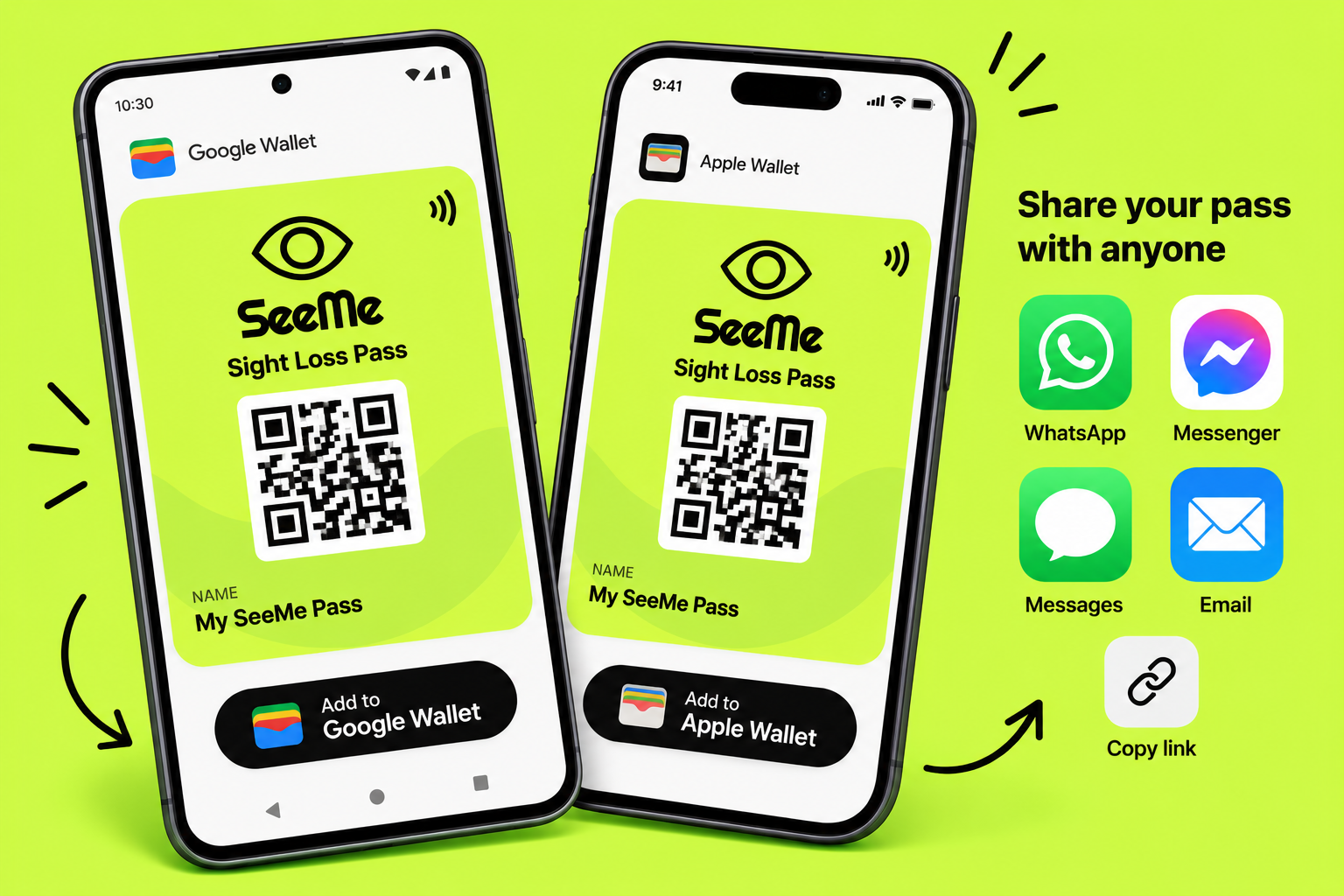
Sight loss is deeply individual, which is why SeeMe isn’t designed around a single definition of what living with sight loss looks like. Users personalise their pass around their own sight, preferences and experiences, and they remain in control of what they choose to share. We’ve worked with users to make that process feel simple and natural rather than clinical — a low-friction way of communicating information that can sometimes be difficult, tiring or uncomfortable to repeatedly explain. The aim isn’t to define somebody by their sight loss. It’s to give them another way to say: this is what helps me, this is what I want you to understand, and this is a little closer to how I see the world.
At its heart, SeeMe is about bridging the gap between explaining sight loss and understanding it. Because when people understand each other better, we can move beyond assumptions and create stronger relationships, better support and more inclusive experiences.